
High Speed Electric Actuator: How to Choose the Right Solution for Fast Valve Automation
- Jun 4
- 6 min read
What Is a High Speed Electric Actuator?
Basic Definition and How It Works
A high speed electric valve actuator serves as a motor-driven device intended to run a valve in a rapid and automatic fashion. Operation typically occurs via the conversion of electrical energy into controlled rotary motion for quarter-turn valves, such as ball valves and butterfly valves. Valve automation requires conversion of electrical energy into controlled rotary motion. Conversion permits a valve to open, close, or move to a required position without manual operation.
For industrial buyers, speed is only one part of the decision. A suitable actuator also needs enough torque, stable control, safe operation, and compatibility with the valve’s sealing and control requirements. This is especially important in water treatment, oil and gas, power generation, chemical processing, HVAC, and industrial automation systems where delayed valve movement can affect safety, process stability, or production efficiency.
What Makes an Actuator “High Speed”?
An actuator should not be judged solely by its no-load speed. In valve automation, the more useful indicator is travel time under a defined torque, valve load, supply voltage, and operating condition. A buyer may need to check:
1. Valve type, such as ball valve or butterfly valve
2. Required torque under working pressure
3. Opening or closing time under load
4. Frequency of operation
5. Power supply and control signal
6. Protection level for wet, dusty, or outdoor environments
7. Safety needs, such as emergency shutdown or fail-safe operation
High Speed Linear Actuator vs High Speed Valve Actuator
High-speed linear actuators create fast, straight-line motion for pushing, pulling, lifting, or positioning tasks. They are often used where controlled linear movement is required, while valve automation usually depends on rotary actuation.
A high speed valve actuator delivers fast rotary movement for quarter-turn valves. Since ball valves and butterfly valves usually move 90 degrees from open to closed, the selection should focus on torque, rotation time, mounting, and control compatibility.
In valve systems, the correct actuator must match the valve stem, mounting interface, torque requirement, duty cycle, and automation signal. A fast actuator that cannot provide sufficient torque under load may fail to fully seat the valve, trigger overload protection, increase motor temperature, or shorten gearbox and motor service life.
Key Factors to Consider Before Choosing a High Speed Electric Actuator
Actuation Time and Real Operating Speed
A fast response is useful in systems where process timing matters. For example, an emergency shutdown line may require quick valve closure to isolate a pipeline. A chemical switching process may need rapid valve movement to reduce mixing errors. A high-frequency industrial automation system may require repeated opening and closing without long delays, but buyers should still confirm the duty cycle, motor temperature rise, and service life under the expected operating frequency.
When comparing products, it is better to ask for the operating time at a specific torque instead of only looking at a general speed claim. AOITEC’s high-speed actuator technology is 5 to 20 times faster than conventional models, which helps support time-critical valve applications.
Torque, Valve Size, and Safety Margin
Speed should not be considered separately from torque. A valve may require more force when pressure is high, media is viscous, the valve seat is tight, or the equipment has been operating for a long time. If the actuator torque is too close to the minimum valve requirement, the system may work at first but become unreliable after aging, contamination, or pressure changes.
A practical selection process may include:
Confirm the valve type and size.
Check the valve manufacturer’s required torque.
Add a reasonable safety margin based on media and operating conditions.
Confirm whether the actuator can maintain the required speed under load.
Review duty cycle, ambient temperature, and protection rating.
For larger valves or safety-related systems, it is usually safer to choose based on actual project data rather than estimated torque alone.
Control Mode: On-Off, Modulating, and Smart Integration
Different applications need different control methods. On-off control is suitable when the valve only needs to open or close. Modulating control is used when the system needs intermediate positioning, flow adjustment, and position feedback to a PLC or control platform, provided that the selected actuator and control module support these functions. However, buyers should confirm whether the selected high speed actuator model supports modulating control, position feedback, or only open-close operation.
For buyers, the key is to match the control method with the process goal. A water treatment backwash valve may only need open-close operation. A dosing or flow regulation system may require modulating control. An emergency shutdown application may require fast actuation and reliable closing logic.
Protection, Environment, and Reliability
Industrial actuators are often exposed to moisture, vibration, dust, heat, and other demanding site conditions. In these environments, operating speed only creates value when the actuator can maintain stable performance over long service cycles.
AOITEC actuator products feature IP68-rated protection, die-cast aluminum housing, 1500 V dielectric strength, F-class motor insulation, and CE-certified designs for demanding industrial environments. We also highlight high-precision gear output and treated alloy construction for long-term stable performance.
Reliability also depends on maintenance conditions. In facilities where manual access is difficult, a compact and durable actuator can reduce service work and improve uptime. AOITEC’s compact design can use ISO 5211 mounting for direct valve installation when the valve interface, stem size, and coupling dimensions are compatible, helping save space and weight in tight installations.
High Speed Electric Actuator vs Pneumatic Actuator vs Solenoid Valve
When to Use a High Speed Electric Actuator
A high speed electric actuator is suitable when a project needs fast valve movement, electric control, easier installation, and reduced dependence on compressed air. It can be especially useful in automated skids, remote valve stations, water treatment systems, industrial production lines, and certain HVAC applications where rapid quarter-turn valve operation is required.
Compared with pneumatic systems, electric actuators can simplify the system layout, as they do not require air compressors, air treatment units, or pneumatic tubing. This may reduce air-system maintenance work and improve installation flexibility, especially in distributed valve networks, although electrical protection, wiring, and control compatibility still need to be checked.
When Pneumatic Actuators Still Make Sense
Pneumatic actuators are still widely used in industrial plants. They can be fast, powerful, and familiar to maintenance teams. If a facility already has a stable compressed air system and the valve requires very frequent movement, pneumatic actuation may remain practical.
However, pneumatic systems also require air supply, tubing, fittings, valves, and maintenance. Air leakage, pressure instability, and compressor energy consumption may increase operating costs. For projects where electric infrastructure is simpler than air infrastructure, a high speed electric actuator may be easier to manage.
When Solenoid Valves May Not Be Enough
Solenoid valves are often chosen for small flow paths and very fast switching. They are compact and responsive, but they may not be suitable for every valve automation project. Larger valve sizes, higher torque requirements, special media, or more flexible control needs may require a motorized actuator instead.
In some applications, a high speed electric valve actuator can offer a broader solution. It may support larger quarter-turn valve automation and integration into automated control systems. For feedback or modulating functions, buyers should confirm the selected actuator model and control module configuration.
Comparison Table for Buyers
Option | Best For | Advantages | Limitations |
High speed electric actuator | Fast valve automation | No compressed air required, easier electrical control integration, suitable for selected quarter-turn valve applications | Requires correct torque, voltage, and control selection |
Pneumatic actuator | Facilities with existing air systems | Fast action, strong output, mature technology | Needs compressed air system and more accessories |
Solenoid valve | Small flow on-off control | Very fast, compact, simple structure | Limited by valve size, media, pressure, and application range |
Why AOITEC High Speed Actuators Fit Industrial Valve Automation
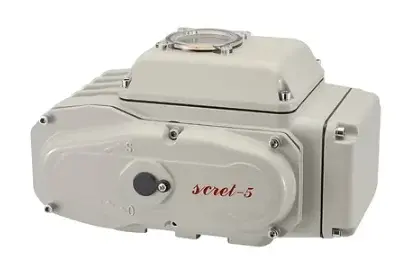
AOITEC high speed actuators are designed for quarter-turn valves such as ball valves and butterfly valves, supporting rapid valve operation in time-sensitive industrial systems. With up to 2 seconds for 50 Nm output, they can help improve response efficiency in emergency shutdown, oil and gas, chemical processing, power, and automation applications. We also bring over 30 years of electric valve actuator R&D and manufacturing experience, with ISO 9001 quality management, CE certification, and patented high-speed actuator technology.

Highspd- AOITEC’s High Speed On/Off EA Hidigico- AOITEC’s High Speed Modulating EA
By combining rapid response times with high torque precision, AOITEC high-speed actuators provide a robust and efficient solution for modern industrial valve control. To see the speed and performance in action, watch our demonstration video: 2s, 50Nm High Speed On/off Actuator (HSP-5).
FAQ
Q: What is a high speed electric actuator used for?
A: It is used to automate fast valve movement or mechanical motion. In valve automation, it is commonly applied to ball valves and butterfly valves in emergency shutdown, oil and gas, chemical processing, industrial automation, and power or energy systems. It may also be considered in water treatment or HVAC projects when rapid quarter-turn valve operation is required.
Q: Is an electric actuator better than a pneumatic actuator?
A: It depends on the project. Electric actuators are suitable when the system needs easier wiring, no compressed air supply, lower maintenance, and integration with automated controls. Pneumatic actuators may still be suitable where compressed air is already available and very frequent operation is required.
Q: Can a high speed electric actuator replace a solenoid valve?
A: Not directly in every case. A solenoid valve is usually selected for compact, small-flow on-off switching, while a high speed electric actuator is used to drive quarter-turn valves such as ball valves and butterfly valves. It may be more suitable when the project involves larger valves, higher torque, remote control, position feedback, or automated system integration. Solenoid valves are still useful for compact and small-flow switching applications.


Comments