
The Ultimate Guide to Brushless DC Actuators: Maximizing Uptime with Smart Stall Protection
Updated: May 25
Design, Control, and Applications of Brushless DC Actuators
What is the Brushless DC Actuator
A Brushless DC (BLDC) actuator serves as an electromechanical device that transforms electrical energy into exact mechanical motion through a brushless motor. This device differs from conventional motors because it avoids physical brushes. Instead, electronic commutation occurs via a controller and position sensors to drive the rotor's permanent magnets.
This specific brushless architecture eliminates mechanical friction and wear, resulting in superior energy efficiency, significantly extended lifespan, and reduced maintenance requirements. BLDC actuators also provide strong torque-to-weight ratios, quick dynamic response, and sharp control over speed and position.
The Evolution of Smart Actuation in Industrial and Consumer Applications
Modern industrial automation has evolved far beyond basic mechanical switching. Contemporary systems require intelligent control units capable of seamless integration with broader facility networks and autonomous fault detection. This change equips modern fluid control devices with capable logic boards that watch performance data live. For example, smart control systems boost overall output, allow distant operation, and offer key protections like overload avoidance. The move to smart monitoring keeps processes in areas like water treatment and power generation steady and ongoing.
How BLDC Actuators Work
Anatomy of a Brushless DC Motor: Stator, Rotor, and Sensors
The inner build of these capable motors sets them apart from older types. The fixed part, known as the stator, holds electromagnetic coils, while the turning part includes permanent magnets. This setup reverses the usual motor structure, so no physical contact transfers power to the spinning rotor. Hall effect sensors or smart sensorless methods follow the rotor magnets' position closely at every moment. The control board receives this clear position info to set the best timing for energizing the stator coils.

The Principle of Electronic Commutation and Power Delivery
These devices skip physical carbon brushes to switch current direction. A solid-state electronic controller handles power flow instead. The controller quickly changes the current in the stator coils, which forms a turning magnetic field that draws the rotor forward. Power delivery works smoothly and cuts down internal friction a lot. AOITEC improves this setup with a relay-free structure, so reliability grows by cutting failure spots in the circuits. This choice fits perfectly for tasks that need many starts and stops.
Key Advantages of BLDC Technology
High Power Density and Compact Design
Removing physical commutators lets engineers fit more power into a smaller size. High power density matters in spots with tight pipeline room or where weight needs to drop. AOITEC created a real bracket-free small design that skips internal brackets fully. An ISO 5211 mounting standard makes direct valve setup possible, so space and weight are saved a lot. Specifically, the overall height and weight are reduced to just 35% of standard models, making it ideal for space-constrained installations and maintenance-intensive environments.
Extended Lifespan and Precision Control
No physical brushes rub against a commutator, so mechanical wear inside the drive unit nearly vanishes. This basic benefit leads straight to much longer operation and fewer regular upkeep jobs. The capable brushless direct current motors give a longer service life, quicker response times, and little maintenance. These units are built for strength and steady long-term work, with a usual service life of fifteen to twenty years. They also show strong efficiency, so energy is saved twenty to sixty percent while handling a broad alternating current input range of sixty to two hundred sixty volts.
Advanced Stall Protection in a Brushless DC Actuator
The Hidden Flaws of Relying Exclusively on Thermal Protection
Delayed Response: Intervening Only After the Motor Temperature Has Risen
Many standard valve automation devices count only on temperature sensors inside the motor windings to stop major breakdowns. The main problem with this method is the built-in delay of heat movement. A mechanical blockage induces an instantaneous surge in electrical current, whereas thermal energy requires time to propagate to the temperature sensor. In that pause, parts inside face strong thermal strain that harms insulation and weakens the permanent magnets.
The Unresponsive State: Downtime Caused by Thermal Shutdown
When the thermal sensor activates at last, it shuts off power to the drive unit completely, so the whole system enters a required cooling time. The equipment remains unable to respond until the inside temperature falls under a set safety point. This cooling can take from a few minutes to more than an hour, based on the surrounding air and unit size. For sites that manage key fluid tasks, this forced stop causes big issues, especially since many usual models handle just a twenty-five percent duty cycle and heat up easily.
How Stall Protection Safely Manages a Brushless DC Motor
Early Detection of Mechanical Jamming and Abnormal Resistance
Capable overload prevention steps act ahead by checking the electrical traits of the system, not waiting for heat to show up. The smart control board keeps watching the electrical current use and rotor position feedback. When a valve sticks due to debris or a mechanical fault, the controller spots a quick current rise plus a sharp stop in rotor motion. Detection occurs in a split second, well before much thermal energy builds.
Cutting Off Continuous High-Current Draw Instantly
When the controller finds the odd resistance from a jam, it breaks the power supply to the stator coils at once. Stopping the electrical flow right away keeps the steady high-current pull from causing fast overheating. This fast action forms a main part of smart automation products built for full overload prevention. The kinetic energy stops safely, which guards the gears' mechanical strength and the valve stem.
Benefits of Stall Protection
Stopping Overheating and Motor Damage at the Source
By halting the current jump before it turns into harmful heat, this safety feature guards the sensitive parts inside the drive unit. The electromagnetic coils stay cool, which saves the resin layers that block short circuits. AOITEC uses F-class insulated motors tested to handle 1500 volts of dielectric strength. Protecting these top insulation materials from repeated thermal shock matters for keeping the equipment's dielectric strength over many years of work.
Maximizing Uptime: Eliminating the Thermal Recovery Waiting Period
Since the inside temperature avoids a key level in a blocked event, no long thermal recovery time follows. After the staff clears the outside blockage, the automation system resets and returns to work at once. This skill proves vital for busy settings, and that explains why AOITEC models handle 100% duty cycle for steady, frequent use. Removing the cooling wait boosts output and cuts money losses from sudden site halts.
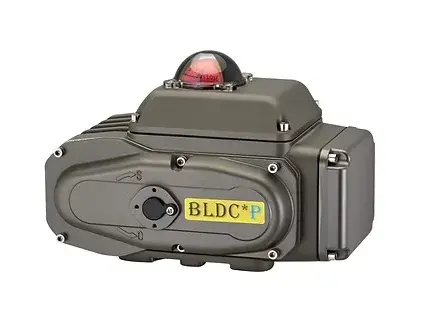

Enhancing the Overall Reliability of the Brushless DC Actuator System
Adding quick electrical action changes the automation device from a basic mechanical driver into a strong, self-guarding system. By removing the main cause of common breakdown types, the pipeline network's dependability rises sharply. This safety logic, paired with a die-cast aluminum housing and IP68 waterproof rating, builds strength even in rough industrial spots. The outcome creates a solid control option that runs without fault through its planned fifteen to twenty-year life cycle.
FAQ
Q: Why does my actuator fail to restart immediately after a jam is cleared?
A: This issue often happens if the device relies only on thermal safeguards. A mechanical jam brings a huge electrical current that generates too much heat. The thermal sensor interrupts the power supply, forcing the equipment into a mandatory cooling phase. Restarting remains impossible until the internal temperature drops to a safe threshold, resulting in costly operational downtime. Systems with instant overload detection stop the current before heat grows, so restarts work right after removing the physical block.
Q: What is the difference between stall protection and thermal protection in a Brushless DC actuator?
A: The difference rests in the timing and way of action. Temperature-based safeguards react after the equipment starts to overheat from a long current jump. Overload or jam detection acts ahead, watching electrical current and rotor motion all the time. It spots odd mechanical resistance in milliseconds and stops power at once, so no damaging heat forms to begin with.
Q: How to prevent nuisance tripping of stall protection in high-load applications?
A: Capable smart control systems let engineers set the sensitivity and timing of the overload prevention logic. By setting exact time delays and current levels, the controller tells a short normal load rise to free a stuck valve from a real mechanical fault. This exact setup keeps steady work without losing safety.
Q: Why is stall protection more critical than thermal protection in automated process design?
A: In detailed industrial tasks like chemical processing or power generation, a stuck valve can cause major system issues or safety risks. Waiting for a heat-tripped device to cool adds time when operators lack control over fluid flow, which operators cannot accept. Instant jam detection gives operators quick fault alerts, lets staff clear the problem, and brings back control without a temperature sensor reset wait, so process stability holds firm.


Comments