
When Thermal Protection Is Already Too Late : Stall Protection for Actuators
- May 23
- 4 min read
Most actuators rely on thermal protection as their last line of defense. But by the time that protection triggers, damage is already underway. Stall protection in actuators intercepts problems at the source before temperatures rise, before downtime accumulates and recovers automatically once the jam clears.
The Blind Spot of Thermal Protection
The vast majority of actuators on the market today are equipped with thermal protection (overtemperature protection) as their primary safety mechanism. When the motor temperature exceeds a set threshold, the system shuts down automatically to prevent burnout. On the surface, this seems sufficient , but there is a fundamental flaw in this approach:
Thermal protection is reactive, not proactive. It waits until the temperature has already climbed to a dangerous level before taking action. By the time it triggers, the motor has been drawing excessive current for seconds or even minutes — insulation degradation, winding stress, and potential permanent performance loss may already be in progress.
There is a second, equally serious problem: once thermal protection activates, the actuator enters a thermal shutdown state. It cannot respond to any control commands until the motor cools back down to a safe temperature. In applications that demand continuous operation — manufacturing lines, medical equipment, HVAC systems — this forced cooldown window can cause production stoppages or service failures far more costly than the motor itself.
How a Stall Event Impacts Typical Valve Applications
A stall event happens when an actuator is trying to move a valve, but the valve can no longer rotate or travel as expected. This can happen because of a seized valve, hardened media, excessive torque demand, debris inside the valve, or another mechanical blockage in the system.
Here is what usually happens during the process:
01 Valve movement stops while the actuator continues driving
The actuator continues sending force to the valve even though the valve itself is no longer moving. From the outside, the system may appear active, but internally the actuator is working against a fixed load.
02 Electrical and mechanical stress increase
As resistance rises, the actuator begins operating under a much heavier load than normal. Current draw increases significantly and internal components are placed under continuous stress. Instead of performing a smooth open or close action, the actuator is effectively pushing against an immovable point.
03 Internal temperature rises quickly
Because the actuator is still attempting to drive the valve, heat starts building inside the unit. In many situations, this temperature increase happens faster than external monitoring systems can respond.
Repeated overheating events may gradually reduce the lifespan of internal components and affect long term operating reliability.
04 Valve control performance is disrupted
Once protection systems activate, the actuator may stop operating temporarily until conditions return to normal. During this period, the valve may remain stuck in its last position. In practical valve applications, this can result in:
• Interrupted process control
• Unstable flow regulation
• Unexpected system downtime
• Higher maintenance requirements
• Reduced equipment reliability
05 Repeated stall events accelerate wear over time
Even when no immediate failure occurs, repeated overload conditions can slowly damage internal electrical and mechanical parts. Over time, this may lead to more frequent servicing, reduced actuator efficiency, and shorter operational life.
This is why stall protection is important in automated valve systems. It helps reduce unnecessary stress on the actuator while supporting more stable and reliable valve operation in daily use.
How Stall Protection Works: Detect, Cut, Retry, Recover
Stall protection is an active safety function used in electric actuators to prevent damage during overload or mechanical blockage conditions. The system continuously monitors operating current during valve movement. When current rises beyond a predefined threshold for a sustained period, the controller identifies the condition as a potential stall or overload event.
Once the abnormal condition is confirmed, the actuator immediately interrupts motor power to prevent excessive heat buildup and continuous mechanical stress. What makes this protection method especially useful in real valve applications is the automatic recovery sequence that follows. Instead of remaining permanently shut down after a fault, the actuator can attempt to restart automatically after a short delay.
The process typically works as follows:
Monitor: Operating current is continuously monitored during actuator movement
→
Detect: Current rises above the allowable threshold, indicating abnormal load or blockage
→
ut Power: Power to the motor is interrupted immediately to prevent sustained overload
→
Auto Retry: After a short pause, the actuator attempts to operate again and checks whether current has returned to normal
If the obstruction has cleared, the actuator resumes normal operation automatically without requiring manual intervention. If the overload condition remains, the protection cycle repeats and continues limiting stress on the system. This automatic retry capability is particularly valuable in practical valve applications because many stall events are temporary rather than permanent. Examples include: Debris briefly blocking valve travel , temporary pressure spikes, valve seating resistance, short duration torque surge, foreign objects that shift naturally after stopping.
In these situations, the actuator may recover on its own once conditions normalize.
Compared with conventional thermal shutdown systems, current based stall protection can react much faster because it detects the electrical symptoms of overload immediately rather than waiting for temperature to rise significantly.
Another advantage is simplicity and reliability. Since the system mainly relies on monitoring electrical current, protection can remain effective without depending heavily on additional external sensors. This allows fast response times while maintaining stable operation in demanding industrial environments.
Overall, stall protection helps reduce unnecessary downtime, protects internal actuator components, and improves long term operational reliability in automated valve systems.

Stall Protection Across AOITEC Actuators
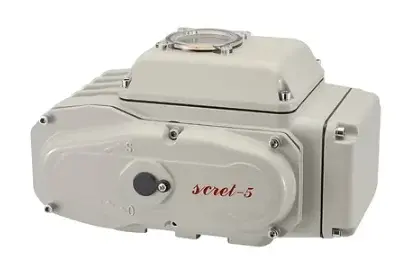
AOITEC’s Highspd® actuator series, intelligent modulating actuator series(digicon series), and Brushless DC actuator can support current based stall protection. By monitoring operating current during actuator movement, these systems can detect abnormal load conditions and trigger protective responses before prolonged overload leads to excessive heat buildup. Depending on controller configuration, functions such as automatic power cutoff, overload detection, and retry or recovery logic can also be supported, helping reduce unnecessary downtime while improving operational reliability in demanding valve automation applications.


Comments